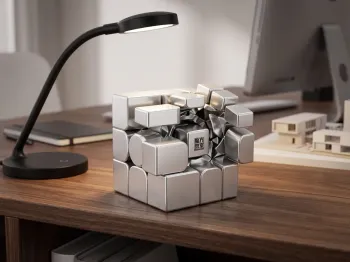
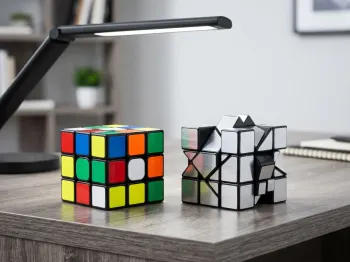
7 Stunning Mirror Cube Patterns That Will Look Amazing on Your Shelf
Transform your Mirror Cube into art! Discover 7 stunning patterns like the Superflip and Cube-in-a-C...
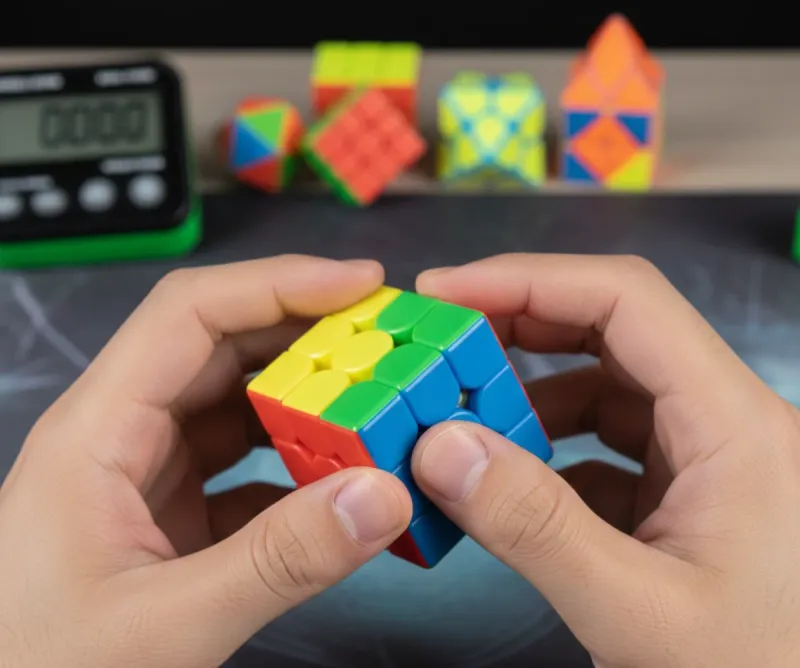
In the world of speedcubing, TPS stands for Turns Per Second. It is the raw measure of how fast you can execute moves on a Rubik's Cube. While knowing the best algorithms is crucial, the speed at which you execute them is what ultimately separates a sub-20 solver from a sub-10 pro. To achieve high TPS, you need to master "finger tricks"—specific ways of moving layers using only your fingertips rather than your entire hand.
Before you can turn fast, you must hold the cube correctly. The "home grip" involves placing your thumbs on the front face (usually on the center piece or slightly below) and your middle, ring, and pinky fingers on the back. Your index fingers should be resting on the top of the back-side edges, ready to flick the top layer (U face).
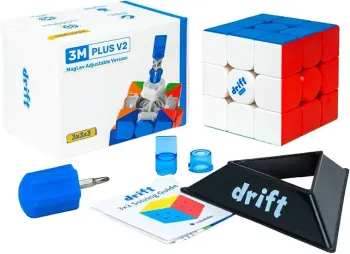
A common mistake among beginners is gripping the cube too tightly with the whole palm. For best results, consider using a modern magnetic cube like the Cubelelo Drift 3M Plus v2, which uses MagLev technology to reduce friction, allowing your fingers to glide through moves with minimal effort.
Most algorithms rely heavily on the Up (U) and Right (R) layers. Here is how to optimize them:
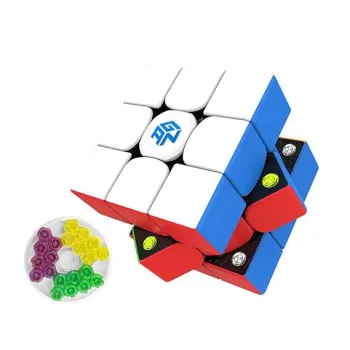
For those looking for a competition-ready experience, the Cubelelo GAN 356 ME features a frosted surface that provides a great grip while allowing for these rapid-fire finger movements.
A "regrip" occurs whenever you have to shift your hand position to perform a move. Every regrip costs you precious fractions of a second. To increase your TPS, you must learn to execute algorithms "regrip-less." This often involves using your "push" moves (using your index finger to push a layer away from you) or using your pinky and ring fingers for D (down) layer turns while your thumbs stay planted on the front.
You can have the fastest fingers in the world, but if your cube is prone to locking up or overshooting, your TPS will suffer. This is why magnetic cubes are essential. Magnets help pull the layers into alignment, allowing you to start your next move before the previous one is even 100% finished (a concept known as corner cutting).
A popular choice among speedcubers looking for a premium feel at a discounted price is the GAN 356 M. Its magnetic core ensures stability even during the most aggressive finger tricks, preventing the cube from deforming mid-solve.
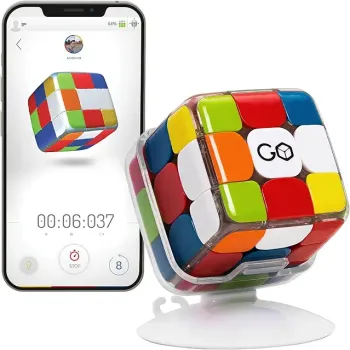
Improving your TPS requires deliberate practice. Start by filming yourself solving the cube in slow motion to identify where you are regripping unnecessarily. You can also use technology to help. A smart cube, such as the GoCube Edge Full Pack, connects to your phone and tracks your TPS in real-time, providing a breakdown of your turns per second for each solve phase.