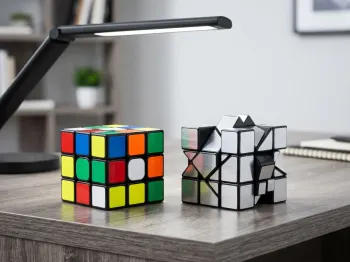
7 Stunning Mirror Cube Patterns That Will Look Amazing on Your Shelf
Transform your Mirror Cube into art! Discover 7 stunning patterns like the Superflip and Cube-in-a-C...
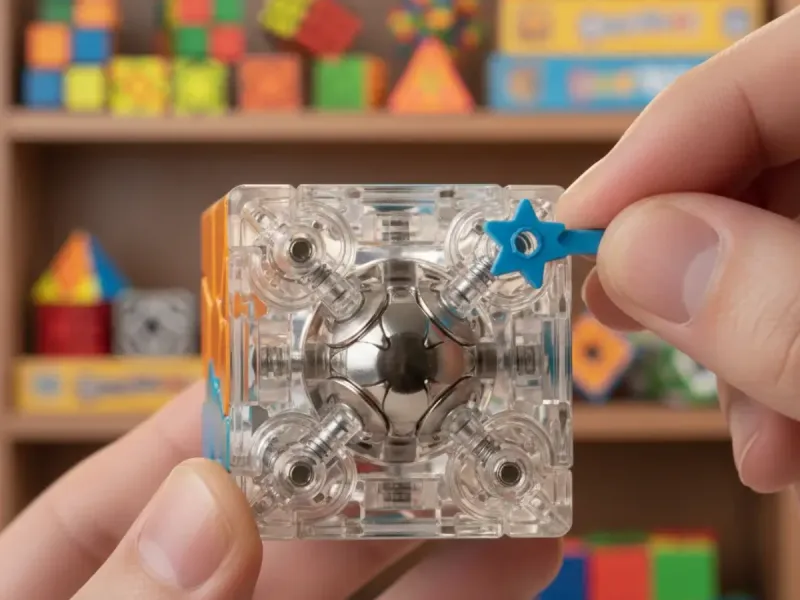
Gone are the days when "tensioning" a Rubik's cube simply meant grabbing a Phillips-head screwdriver and hoping you turned all six screws the same amount. In the modern era of speedcubing, flagship puzzles come equipped with sophisticated dual-adjustment systems, magnetic levitation (MagLev), and interchangeable magnet capsules. For many cubers, this abundance of choice can be overwhelming.
Finding the right setup is crucial because it directly impacts your corner-cutting, stability, and overall turning speed. Whether you are using a GAN 356 M or the latest MoYu flagship, understanding these mechanics is the first step toward faster solve times.
Modern adjustment systems generally split "tension" into two distinct categories: Axis Distance and Elasticity.
This is the traditional "screw depth." It determines how far the center pieces can pull away from the core.
This determines the force pushing back against you when you turn. In modern cubes, this is often adjusted via a clicking nut or gear system.
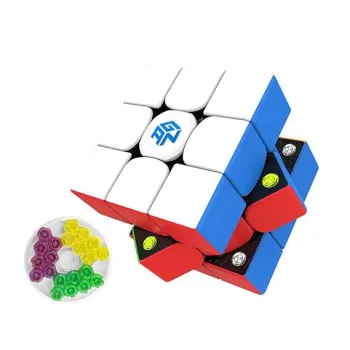
One of the biggest innovations in recent years is MagLev technology. Instead of physical steel springs, MagLev cubes use two opposing magnets to create tension. This eliminates "spring noise" (that annoying metallic squeak) and reduces friction, making the cube feel incredibly fast and smooth.
For cubers looking to experience this frictionless feel, the Cubelelo Drift 3M Plus v2 (MagLev) is an excellent entry point into high-performance magnetic levitation. It offers a premium feel at a fraction of the cost of some high-end flagships.

While tensioning controls the physical movement, magnets provide the "clicking" sensation that helps the layers align. Many modern flagships, such as the Cubelelo MoYu Super RS3M Ball-Core, utilize a ball-core magnetic system. This adds an extra layer of magnetic attraction from the core to the corners, significantly increasing stability during fast solves.
If you find yourself overshooting your turns, you likely need stronger magnets or tighter elasticity. If the cube feels too "heavy" to turn, try weakening the magnets or loosening the spring compression.

If you're unsure where to start, follow this simple process:
Choosing the right tensioning system is a personal journey. There is no single "best" setting; only the setting that feels right for your turning style. By understanding the difference between axis distance, elasticity, and magnet strength, you can transform a good cube into a world-class speedcubing machine tailored specifically for you.