7 Stunning Mirror Cube Patterns That Will Look Amazing on Your Shelf
Transform your Mirror Cube into art! Discover 7 stunning patterns like the Superflip and Cube-in-a-C...
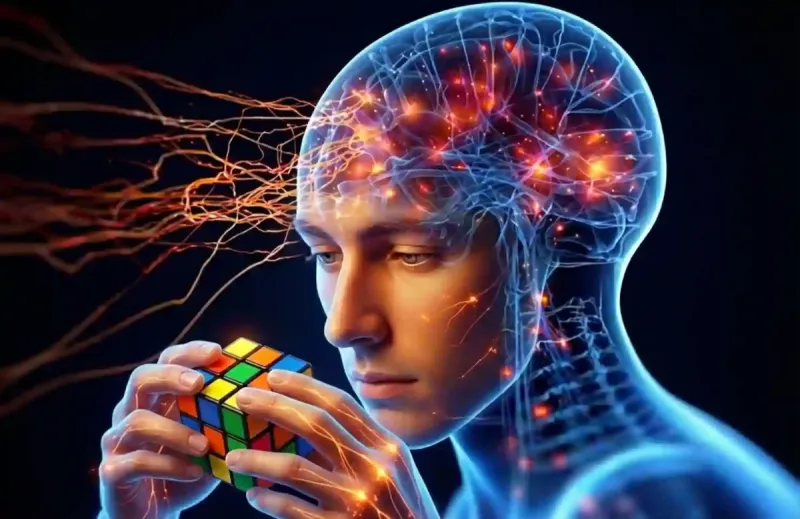
Every speedsolver knows the feeling. You finish a solve, look down at the timer, and see those glowing digits: a new Personal Best (PB). In that millisecond, a wave of euphoria crashes over you. It’s not just satisfaction; it’s a physiological event. This sensation is powered by dopamine, the brain's primary reward chemical, and it is the engine that drives the global speedcubing community.
Dopamine is often misunderstood as the 'pleasure hormone,' but in the world of psychology, it is more accurately described as the 'anticipation hormone.' It is released when we expect a reward or achieve a goal. In speedsolving, the brain enters a high-stakes feedback loop:
Speedsolvers often speak of being 'in the zone.' Psychologists call this Flow. Coined by Mihaly Csikszentmihalyi, Flow is a state of total immersion where your skill level perfectly matches the difficulty of the task. For a cuber, this is the sweet spot where finger tricks become subconscious and the cube seems to solve itself. During Flow, the brain minimizes extraneous noise, focusing entirely on pattern recognition, which leads to a deep sense of psychological well-being.
Because the brain thrives on the novelty of new PBs, hitting a plateau can be psychologically taxing. When you stop seeing rapid improvement, the dopamine hits become less frequent. This is where many cubers experience burnout. Understanding the science can help: when the 'easy' dopamine of new records fades, speedsolvers must shift their mentality toward the intrinsic joy of the process rather than just the result on the timer.
To maintain a healthy relationship with the cube, it’s important to manage your expectations and your neurochemistry. Here are a few tips:
At its core, speedcubing is a beautiful intersection of mechanical engineering and human psychology. By understanding the 'happy hormones' at play, we can better appreciate the grind and keep our passion for the puzzle alive for years to come.