7 Stunning Mirror Cube Patterns That Will Look Amazing on Your Shelf
Transform your Mirror Cube into art! Discover 7 stunning patterns like the Superflip and Cube-in-a-C...
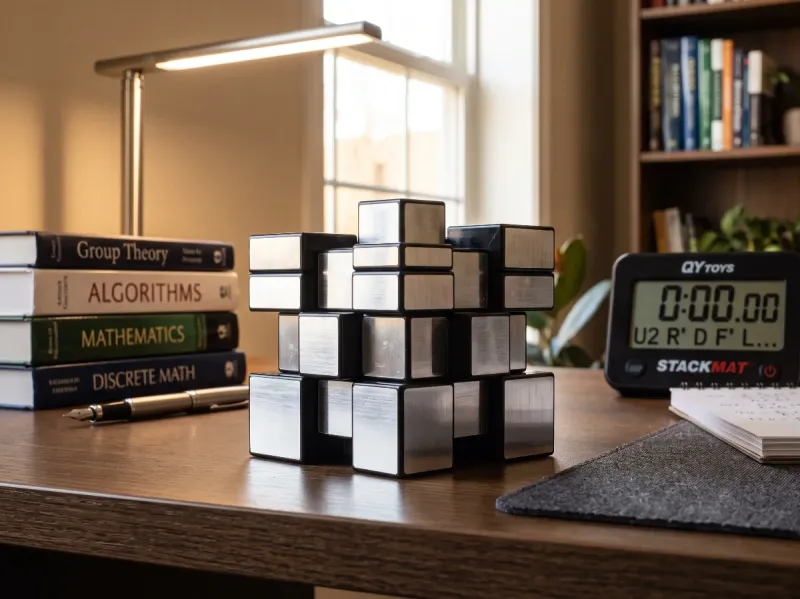
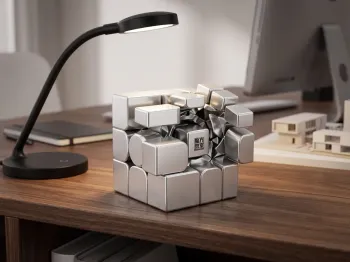
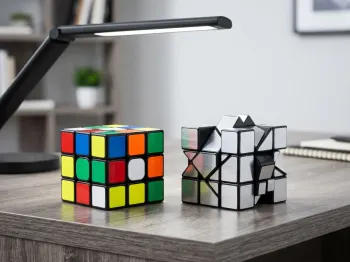
The Mirror Cube, also known as the Mirror Blocks or the Bump Cube, is one of the most popular and visually striking variations of the classic 3x3 Rubik's Cube. At first glance, it looks like a futuristic, monochromatic sculpture. But once you scramble it, it transforms into a chaotic mess of protruding rectangles and varying heights. Unlike a standard cube where you solve by color, the Mirror Cube requires you to solve by shape and size.
For many cubers, the Mirror Cube is the first "shape mod" they encounter. It uses the exact same internal mechanism as a standard 3x3, meaning the algorithms you already know (like Sune, T-Perm, or the basic Layer-by-Layer method) will work perfectly. However, the challenge lies in visual recognition. You are no longer looking for the red-white edge; you are looking for the piece that is 1.5 centimeters thick and 2 centimeters wide. This guide will walk you through the nuances of mastering this puzzle and provide the tips you need to transition from color-based solving to shape-based mastery.
Before diving into the mechanics of the solve, it is important to note that the physical quality of your Mirror Cube significantly impacts your learning experience. Older versions of Mirror Blocks were notorious for catching, locking up, and having stickers that peeled off easily. If you want a frustration-free experience, we highly recommend using a modern, magnetic version.
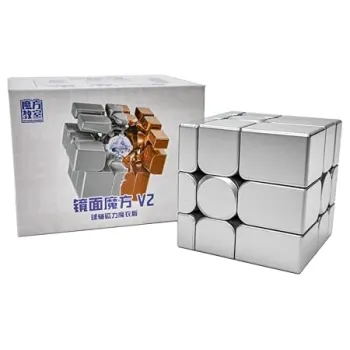
Using a premium puzzle like the MoYu Mirror Cube 3x3 V2 Magnetic Ball-Core Shape Mod | Silver UV Coated Finish & Auto-Alignment | Premium Stability, Smooth Turning & Anti-Pop Mechanism : Amazon.in: Toys & Games makes a world of difference. The magnetic core helps the layers snap into place, which is vital when you are dealing with pieces of different sizes that don't always align flush against the centers. The UV coating also ensures that the puzzle remains grippy and looks professional on your shelf.
Solving a Mirror Cube is a tactile and visual experience. Because the pieces are usually a single color (often silver or gold), you rely heavily on the shadows and reflections to determine the height of the pieces. This makes your environment a key factor in your success.
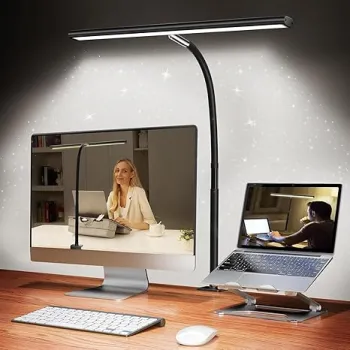
In low light, it is almost impossible to tell the difference between two pieces that differ by only a few millimeters. To avoid eye strain and improve your recognition speed, you need a dedicated light source that minimizes glare while highlighting the edges of the pieces. A high-quality desk light, such as the Airlonv LED Desk Lamp for Office Home, Eye-Caring Desk Light with Stepless Dimming Adjustable Flexible Gooseneck, 10W USB Adapter Desk Lamp with Clamp for Reading, Study, Workbench (Dark Black), allows you to adjust the brightness and angle to see exactly how a piece fits into its slot.
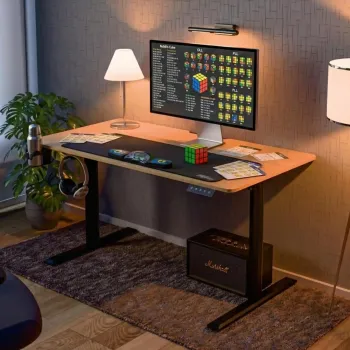
Mastering a new puzzle takes time and patience. If you are hunched over a coffee table, you'll find yourself getting tired quickly. Professional speedcubers often use height-adjustable workstations to ensure they can maintain a healthy posture while practicing for hours. For a stable and ergonomic setup, the Green Soul Imperium Height Adjustable Table for Office Work | Everyday Ergonomic Desk with One Piece Top | Advance Memory Preset | 3 Year Warranty | Installation Provided (GreyOak,1100 x 600 Top) is an excellent choice for any cubing enthusiast.
On a standard 3x3, the centers define the color of the face. On a Mirror Cube, the centers define the depth of the face. Take a moment to look at your cube. You will notice that one center is very shallow (almost flush with the core), while the opposite center is very tall.
To start your solve, identify the "tallest" or the "flattest" face. Most beginners find it easiest to start with the thickest pieces. These pieces are the easiest to identify by touch and sight. When you turn a layer, look for pieces that sit flush with the center. If a piece sticks out or is sunken in, it doesn't belong on that face.
Just like a 3x3, we start with the cross. If you've chosen the "tallest" face, you need to find the four edge pieces that match the height of that center.
Now, we move to the corners. On a Mirror Cube, corners have three dimensions: length, width, and height. To insert a corner, find a piece that matches the empty corner "pocket."
Pro Tip: Use your thumb to feel the transition between the pieces. If your thumb can slide across the join without hitting a "bump," the pieces are perfectly aligned. This is why it's called the Bump Cube!
In the second layer, you only need to place four edge pieces. This is often the most satisfying part of the solve. You are looking for edges that are currently in the top layer (which should be the "thin" side) that belong in the middle.
To identify where a piece goes, look at the width of the gap between the centers in the middle layer. Then, look for an edge piece in the top layer that appears to have that same width. Use the standard 3x3 edge insertion algorithm (U R U' R' U' F' U F) once you've matched the heights.
This is where most beginners get stuck. On the last layer, you aren't looking for a yellow cross; you are looking for a flat surface.
Use your 3x3 algorithms to get all the pieces on the top layer to be the same height.
Even if the top is flat, the pieces might be in the wrong positions. Look at the sides. Do the corners match the width of the side centers? If not, use a T-Perm or Y-Perm to swap them. Finally, use a U-Perm to cycle the edges until every single piece is flush.
Once you've mastered the basic solve, the next step is to get faster. The Mirror Cube is a popular event in unofficial competitions and at home. To truly see how you stack up, you should use a professional timing system. A stopwatch on your phone is okay, but the tactile feel of a stackmat timer is much better for building consistency.
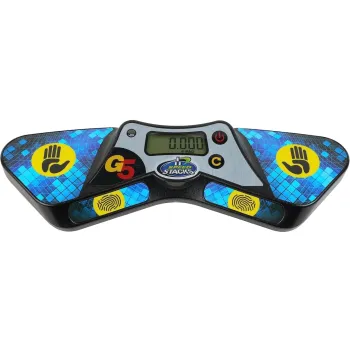
The Speed Stacks Stackmat Pro Timer Gen 3 (Black) is the gold standard for speedcubing. It allows you to start and stop the clock with your palms, just like in a real competition, giving you an accurate measurement of your Mirror Cube solve times.
Mastering the Mirror Cube is a rewarding journey that forces you to look at the geometry of the 3x3 in a completely new way. By focusing on shape rather than color, you sharpen your spatial awareness and deepen your understanding of how the cube's mechanisms work. With the right equipment and a bit of patience, you'll be solving this "messy" masterpiece in no time. Happy cubing!