7 Stunning Mirror Cube Patterns That Will Look Amazing on Your Shelf
Transform your Mirror Cube into art! Discover 7 stunning patterns like the Superflip and Cube-in-a-C...
Speedcubing has evolved from a simple parlor trick into a highly technical sport where milliseconds make the difference between a podium finish and a middle-of-the-pack result. To the uninitiated, it looks like a blur of motion, but to a speedcuber, it is a calculated symphony of physics, mechanics, and data-driven training. Understanding the science behind cube movement is essential for anyone looking to break the sub-10-second barrier.
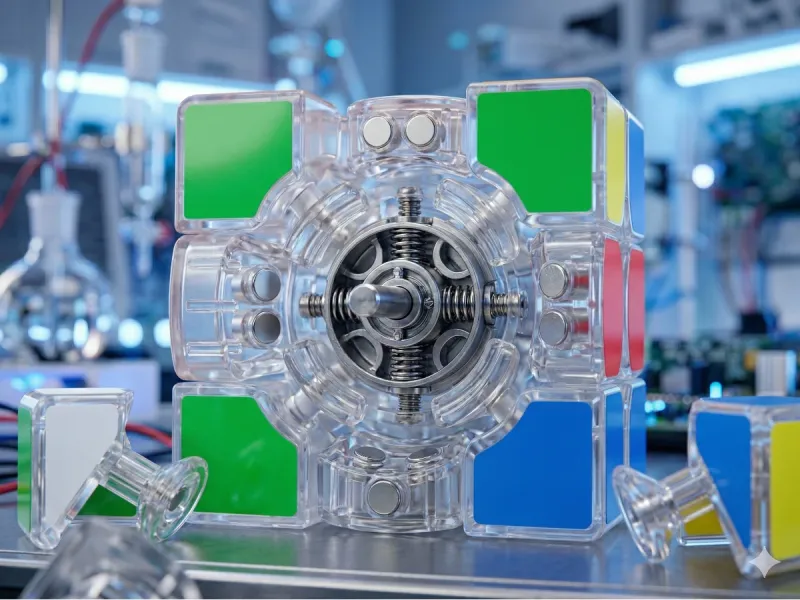
At its core, a 3x3 cube is a mechanical puzzle with 26 moving parts revolving around a central core. The primary enemy of speed is friction. When you turn a layer, the plastic surfaces rub against each other, creating heat and resistance. Modern cubes minimize this through internal honeycomb patterns that trap lubricant and reduce surface contact.
Another critical concept is 'corner cutting'—the ability of a cube to complete a turn even if the adjacent face is not perfectly aligned. This is achieved through the geometry of the pieces and the tension of the internal springs. A cube with high-performance specs, such as the HELLOCUBE GAN 356 M 3x3 Magic Speed Cube Stickerless 3x3x3 Magnetic Cube Gans 356M(Standard Version with GES), allows for aggressive corner cutting, which compensates for slight inaccuracies in a cuber's finger tricks.
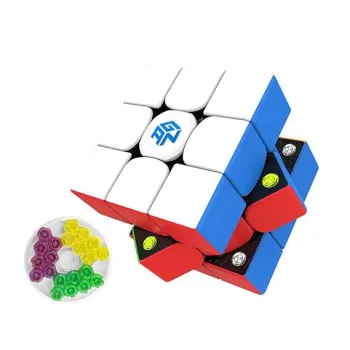
Before 2016, cubes relied solely on spring tension. Today, magnets are the gold standard. Small neodymium magnets are placed inside the corner and edge pieces to create a tactile 'click' that helps align the layers. This stabilization prevents 'over-shooting' (turning a face too far) and 'lock-ups' (when pieces catch on each other).
The magnetic feel can vary from subtle to strong. For those who prefer a reliable, mid-range magnetic pull with customizable tension, the HELLOCUBE GAN 356 M 3x3 Magic Speed Cube Stickerless 3x3x3 Magnetic Cube Gans 356M(Standard Version with GES) is a fantastic option that balances stability with speed. These magnets ensure that the cube remains square even during high-speed TPS (turns per second) bursts.
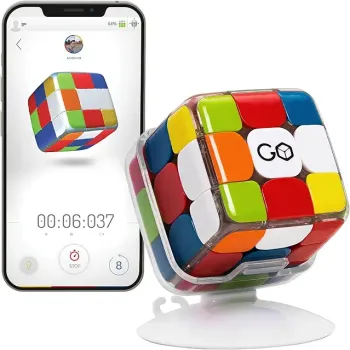
The newest frontier in the science of speed is digital integration. Smart cubes use internal sensors and Bluetooth connectivity to track every turn you make. This data is then sent to an app that analyzes your cross efficiency, F2L (First Two Layers) transition speed, and even your rotation count.
For cubers looking to identify weaknesses in their solve, using a connected device like the GoCube Edge Full Pack - Connected Smart Cube provides a visual breakdown of where time is being lost. This level of analysis was impossible a decade ago. Similarly, for those who want a futuristic training partner, the eX-Mars Connect | AI Robot Cube & Smart Cube, Self Scrambling STEM Cube with 10 Puzzle Types | Self Solving Speed Cube, Plays Music | Great X-Mars Experience for Kids, Teens & Adults offers AI-driven features like self-scrambling and multiple puzzle modes, making it an excellent STEM-focused tool for understanding cube state logic.
Optimization isn't just about the cube; it’s about the measurement. Cubers rely on specialized timers to record their progress. While phone apps are common, they don't simulate competition conditions. A dedicated physical timer, such as the Speed Stacks Stackmat Pro Timer Gen 3 (Black), is necessary for serious training because it forces you to start and stop the clock with your hands, just like in a World Cube Association (WCA) event.
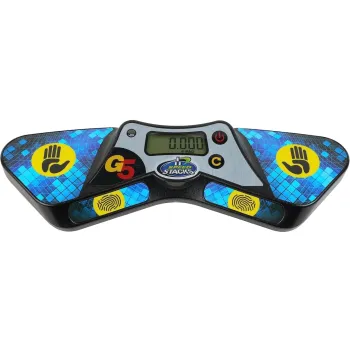
Consistent practice with accurate timing builds muscle memory. When you combine precise hardware with data-driven feedback, your brain begins to recognize patterns faster, reducing the 'recognition pause' between different stages of the solve.
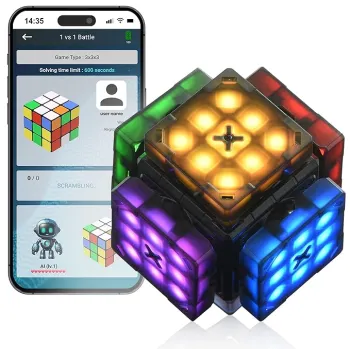
If you are looking to optimize your performance and dive deeper into the science of speedcubing, here are the essential tools we recommend for every skill level:
By understanding the mechanics of your cube and utilizing modern technology, you can streamline your practice and see significant improvements in your solving speed. Happy cubing!